Posts

Blog Post #7 Journalism, Then and Now

Image
The journalism of the eighteenth century seemed more of a commentary upon everyday life as opposed to the journalism of the modern times that is focused on the occurrences of everyday life. Steele and Addison set out to “…enliven morality with wit and to temper wit with morality, that my reader may, if possible, both ways find their account in the speculation of the day.” The Washington Post slogan “Democracy Dies in Darkness” is symbolic towards the dangers of silencing information. Modern journalism is focused on the delivery of said information before any competitor hence the inception of breaking a story. From the writings of Johnson, Addison and Steele one can infer that they strived to elucidate the reader. Nowadays, the focus is centered on skewing the reader’s perspective to whomever funds the newspaper or network. For example, Fox News caters to conservatives while CNN leans more for liberals. This doesn’t mean that what’s being reported is not true, but that the facts are ...
Blog Post #6 Anonymous Lady Poetry

Image
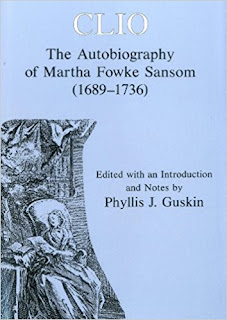
I every substance would resign To clasp thy aerial breast to mine; Or if, my love, that could not be, I would turn air to mix with thee. (57-60) This excerpt is from “A Letter to My Love—All Alone, Past 12, in the Dumps” from the Anonymous Lady. Unlike others of the time, she revived the amorous ardor of some metaphysical poets such as Andrew Marvell and John Donne. Though she doesn’t necessarily use a metaphysical conceit, her poems do express the passions and pangs of love but, most importantly, from a female perspective. What I really appreciate about her poetry is her unabashed approach to it. She easily could have conformed to the norms of that time and written like her male counterparts, focused more on criticisms and satire yet because she did not receive their similar education, “Who were the slaves of Busby's nod,/And learned their methods from his rod” (15-16) she developed a truer style to herself. Her ability to maintain the couplet form throughout the poem’...

Post #5. Aphra Behn: A Slave to her Bias

Image
Though Warren Chernaik argues that Aphra Behn’s Oroonoko is anti-slavery, I would counter-argue that Behn’s portrayal of Africans de-humanizes them as much as a pro-slavery stance. Oroonoko’s extreme solution towards the fate of Imoinda could not have been well received by the Christian audience of 17 th century England, however, if the audience already had a mindset stereotyping Africans or savages, Oroonoko’s actions would have seemed justified. Therefore, Behn’s portrayal would only serve as reinforcement to these stereotypes. Behn’s acknowledgement of Oroonoko’s beauty is based entirely on Oroonoko’s physical characteristics that mirror the ideal values of a fellow Briton. In a way Behn is implying that she and those of her race, are suited in determining the worth of others. In eschewing Oroonoko original name, giving him the name of Caesar, and then referring to him as such throughout the rest of the narrative, shows cultural belittlement. Perhaps in the narrative, Oroonoko was...

Blog Post #4 Locke and Modern Thought

Image
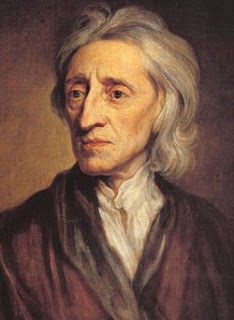
It can be reasonably argued that the liberties of modern Western society stem from the Enlightenment period. The case is especially strong for the United States considering that Thomas Jefferson used John Locke’s phrase “life, liberty, and the pursuit of happiness” in the Declaration of Independence. The American and French revolutions can both attribute their inceptions to Locke’s tenacity for advocating independent thought. By independent thought, I mean thought and ideas the thinker has come to by method of his or her contemplation and who’s thought and ideas align with the thinker’s own philosophical systems. In this regard, even if the idea is detrimental to others, the idea comes from an unshackled thinker. Once thought was freed, the body followed. Both the Church and the Crown, entities whose survival depends on governed thought, were weakened by Locke’s ideas. This weakening, however, pre-dated Locke by half a century. The Scientific Revolution of the 16 th century champione...

Bunyan and Newton. Blog Post #3

Image
As technology continues its rapid evolution and begins to near concepts that one hundred years ago would have been deemed science fiction (AI, Mars exploration, self-driving cars, etc.) spirituality has also decreased. Spirituality in this sense is not synonymous with religion. By spirituality I mean the innate sense of camaraderie to nature and the acceptance of the unknown within and beyond us. In no way am I against scientific progress but one must acknowledge that the techno-space created by the advent of wonderful gadgets (smartphones, smart TV’s, ) has insulated an environment in which notions lacking scientific background, though not rejected, are not readily given the attention that our predecessors bestowed to them. Naturally religion would be the most affected. Bunyan Pilgrim’s Progress offers us an analogy to our current situation. We are in Vanity Fair. Materialism follows its promiscuous nature and wants us all. Facebooks, Instagrams, and Snapchats demand we share our s...

Dryden Blog Post #2

Image
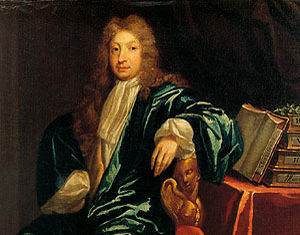
Unlike the satire of today, Dryden’s satire follows strict rules of meter, rhyme, and form as seen in “Mac Fleknoe.” Considering that he greatly admires the likes of Ben Jonson and Shakespeare, it shouldn’t be surprise that his work is replete with subtle wit. Perhaps it is because the target of “Mac Fleknoe” is also a poet that doubles Dryden’s efforts in not only writing a piece that is poetically sound but that the piece be better than any work published by Shadwell. If the piece were to fail in the latter sense, it would be a self-defeat. By likening Shadwell to an heir of a dunderheaded throne, Dryden uses the loftiness of that position of power and inverses it’s significance. The audience of that time, having grown up with Jonson’s, Fletcher’s, Beaumont’s and Shakespeare’s plays, likely favored wit above all adornments and so Dryden’s satirical style was likely very appealing to them. Satire nowadays can be found in the form of political cartoons and sketches in comedy shows...

Blog Post #1

I had never considered the parallels between the Enlightenment period and the 21st century and so I'm quite excited to see what direction the class will take in this endeavor. The phrase, "History does not repeat itself, but it rhymes" comes to mind. This also makes me wonder if there are recurring periods of time throughout history in which the zeitgeist is very similar to previous points in time yet the costume and technologies serve as facade to trick the observer into thinking that his period in time is unique while unknowingly repeating the same thought men before and after him will have. The topic that draws my interest the most is politics and its waltz with literature. Having read Voltaire and Swift recently, I find that irony and satire are effective tools in showing the innate imperfections of government and relegating it to the level of men. By reminding men that government is a product of himself, this opens an easier path to holding the government accountable...